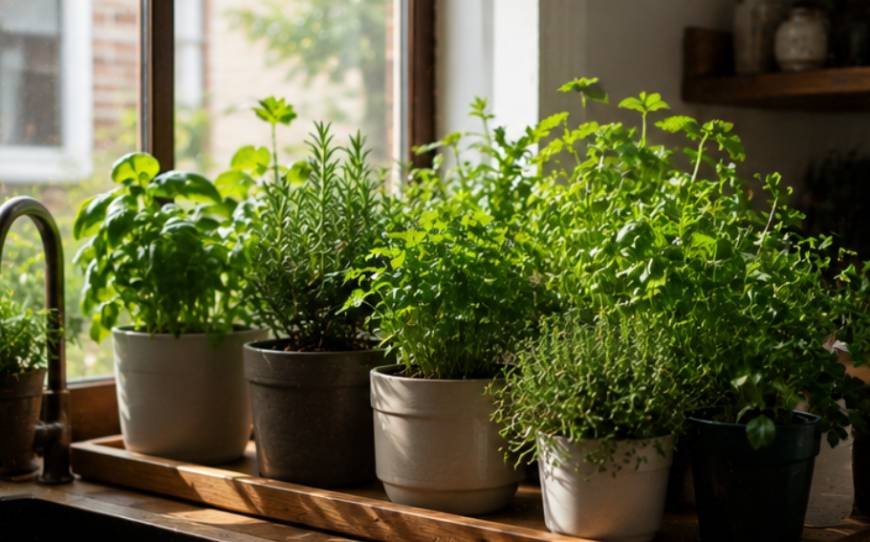
A sunny kitchen shelf once seemed like the perfect place for my basil, parsley, and rosemary. Within weeks, however, one pot stayed swampy while another dried like dust. Choosing the best soil for indoor herb garden plants changed everything because healthy herbs depend on what surrounds their roots, not only on sunlight and watering.
Indoor herbs need a growing medium that holds enough moisture for steady growth while allowing extra water to escape. The right mix should stay loose, feel light in the pot, and contain enough air spaces to keep roots active and healthy.
Choose A Light Potting Mix
The best growing medium is usually a soilless blend made specifically for pots.
What Soilless Really Means
A soilless potting mix may contain coconut coir, peat moss, composted bark, perlite, pumice, vermiculite, compost, or worm castings. Although the product may be sold as potting soil, it often contains little actual ground soil.
This is beneficial for indoor herbs. These ingredients create a lighter root environment, reduce compaction, improve water movement, and make containers easier to lift and reposition.
What To Find On The Label
Look for packaging that says potting mix, indoor potting mix, container mix, or organic potting mix. The ingredient list should include a moisture-retaining material such as coconut coir or peat, combined with an aerating material such as perlite, pumice, or bark.
Avoid products made mainly from topsoil. Also be cautious with very rich mixes containing large amounts of fertilizer because culinary herbs often produce better aroma and flavor when they are fed moderately.
Why Garden Soil Fails
Yard soil may look healthy outdoors, but it usually becomes dense inside a pot. Repeated watering causes fine particles to settle together, reducing airflow and slowing drainage.
Garden soil behaves very differently in containers, even after learning how to improve clay soil for a vegetable garden, because indoor pots still require a lighter and more aerated growing medium.
Outdoor soil may also introduce fungus gnats, weed seeds, insects, fungal spores, or plant diseases into the home. A clean commercial potting mix is safer and more predictable for windowsill herbs.
Top Commercial Soil Options
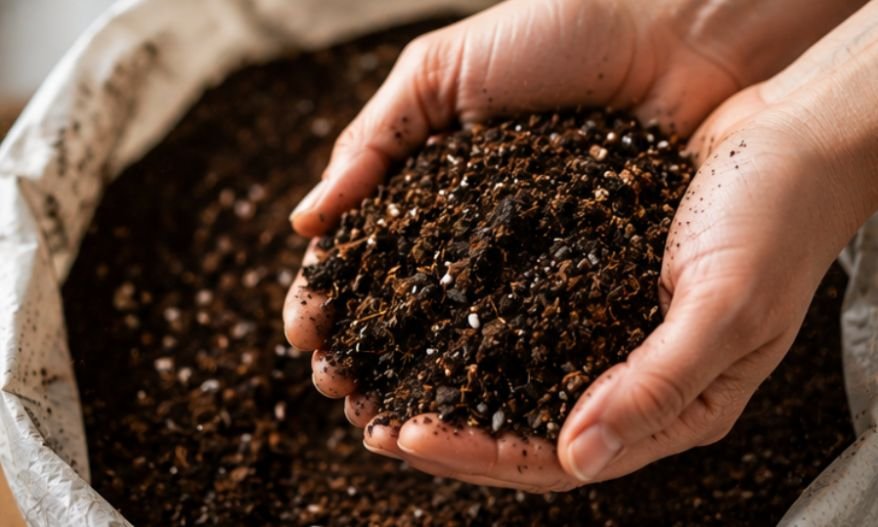
Ready-made products are convenient when you want to start planting without measuring several separate ingredients.
Rosy Soil Herb Mix
Rosy Soil Herb Mix is a peat-free option designed for growing culinary herbs in containers. Its formula may include biochar, compost, and ingredients that support drainage, nutrient availability, and microbial activity.
A four-quart bag may cost around $19.99, although prices can change by retailer. It is a useful choice for gardeners who want an organic-style mix and prefer to avoid peat-based products. Check the current label because brands sometimes update ingredients or bag sizes.
Miracle-Gro Organic Indoor Potting Mix
Miracle-Gro Organic Indoor Potting Mix commonly uses coconut coir to manage moisture while maintaining a light texture. This can help leafy herbs stay hydrated without placing their roots in dense, slow-drying soil.
Product formulas vary, so read the package before planting edible herbs. Check whether fertilizer is already included because newly potted herbs may not need additional feeding for several weeks.
Standard Organic Potting Mix
A general organic potting mix can work well for basil, mint, parsley, cilantro, dill, and chives when it has visible perlite and drains freely. Test it by squeezing a moist handful. It should hold together gently but break apart easily when touched.
When a commercial mix feels heavy or stays soaked for days, blend in extra perlite, pumice, or fine orchid bark before using it.
Match Soil To The Herb
Different herbs come from different growing conditions, so one formula cannot suit every plant perfectly.
Leafy Herbs Like Moisture
Basil, parsley, cilantro, mint, and chives appreciate even moisture. Their mix should drain well but retain enough water to prevent rapid wilting.
Use a balanced indoor potting mix containing coir or peat with visible perlite. A small amount of compost or worm castings can provide gentle nutrition, but too much may keep the pot wet and encourage weak, overly soft growth.
Mint should usually have its own container because its roots spread aggressively. Basil and parsley can share similar soil, but each plant still needs enough room to develop a healthy root system.
Mediterranean Herbs Need Grit
Rosemary, thyme, oregano, sage, and lavender naturally prefer drier, faster-draining conditions. Dense moisture-retaining soil often causes yellowing, leaf drop, stem decline, and root rot.
Mix ordinary potting soil with cactus mix, perlite, or pumice. These ingredients create larger air spaces and help the root zone dry between waterings.
Terracotta pots are useful for these herbs because their porous walls allow moisture to evaporate. However, check the soil regularly during hot weather because terracotta can dry more quickly than plastic or glazed ceramic.
Deep Roots Need Space
Cilantro, dill, and parsley often perform better in deeper pots. Their roots need loose soil that allows downward growth without becoming compacted.
Sow cilantro and dill directly into their final containers when possible. Both plants may dislike repeated transplanting, particularly once their taproots have started developing.
Mix Your Own Soil
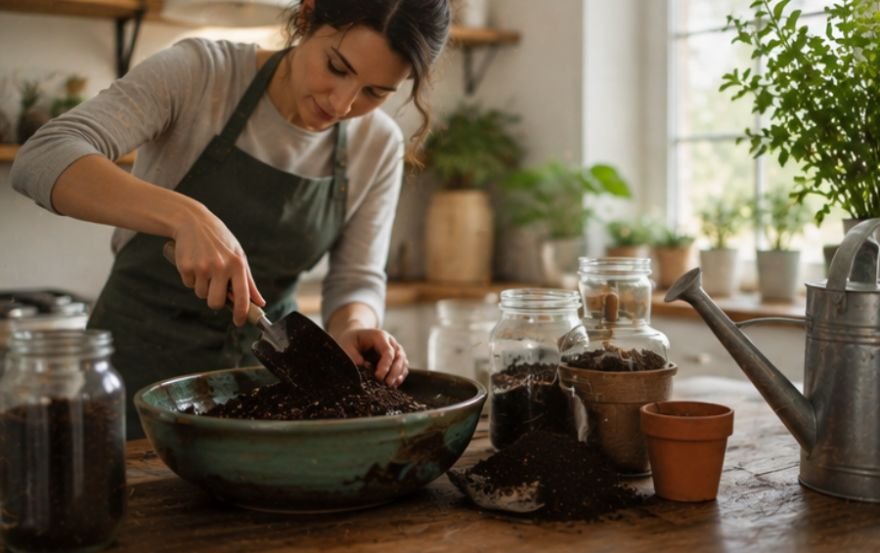
Making the best soil for indoor herb garden containers at home is simple when you use equal parts of three reliable ingredients.
Step 1: Build The Base
Measure one-third organic potting soil or mature screened compost. This portion gives the blend structure and provides a mild supply of nutrients.
Avoid using unfinished compost because it may continue decomposing inside the pot, create unpleasant odors, generate heat, or attract small insects.
Step 2: Add Drainage
Mix in one-third perlite. These lightweight white particles keep the blend loose and create pathways for water and oxygen.
Wear a mask or dampen perlite before pouring because the dry dust can irritate your nose and throat. Pumice can replace perlite when you want extra weight for tall or top-heavy herbs.
Step 3: Control Moisture
Add one-third coconut coir. Coir absorbs water while helping the mixture remain springy and open.
Hydrate compressed coir before measuring it. Squeeze out excess water so the finished blend feels lightly damp rather than dripping wet.
Step 4: Adjust For Dry-Loving Herbs
For rosemary, thyme, oregano, sage, or lavender, add an extra handful of perlite to each medium pot. You can also replace part of the base with cactus or succulent mix.
For basil, parsley, mint, and chives, keep the original balanced formula. These leafy herbs benefit from slightly greater moisture retention.
Pot Herbs The Right Way
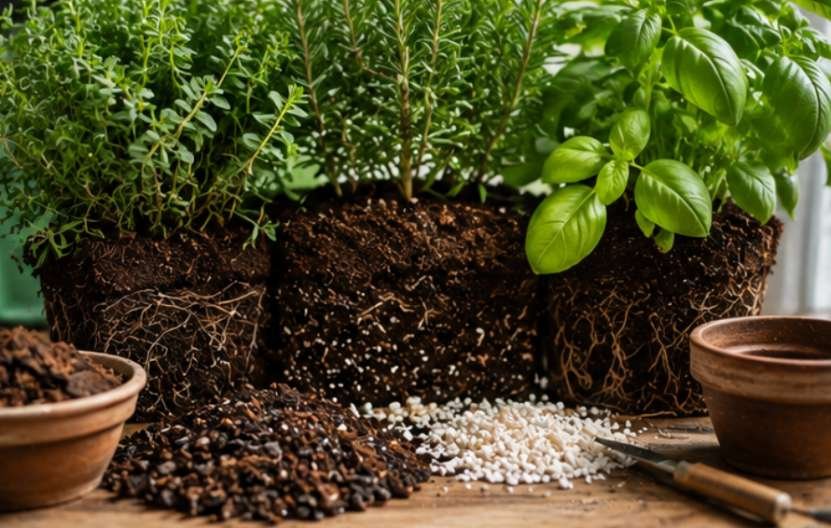
Good soil still needs a suitable container and careful planting.
Open The Drainage Route
Use a container with at least one open hole. Cover a very large hole with mesh or a small piece of coffee filter to keep the homemade potting mix inside while allowing water to leave.
Do not place stones at the bottom. A gravel layer does not improve drainage through the soil and reduces the space available for healthy roots.
Fill Without Pressing
Add damp potting mix loosely and avoid packing it down. Position the herb at the same depth it occupied in its nursery pot, then fill gently around the root ball.
Leave about an inch of space below the rim. This makes watering easier and prevents soil from washing over the sides.
Water By Touch
Water thoroughly after planting until excess moisture exits the drainage hole. Empty the saucer so the pot does not sit in collected water.
Although the best way to water raised garden beds depends on outdoor soil depth and weather, indoor herbs need smaller, more precise watering based on how quickly each potting mix dries.
Check the surface with your finger before watering again. Basil may need water when the top inch feels dry, while rosemary and thyme usually benefit from drying a little deeper.
Frequently Asked Questions
1. What Type Of Potting Soil Is Best For An Indoor Herb Garden?
The best soil for indoor herb garden plants is a loose, fast-draining potting mix containing coconut coir or peat for moisture and perlite, pumice, or bark for airflow.
2. What Are Common Mistakes Growing Indoor Herbs?
Common mistakes include using yard soil, overwatering, choosing containers without holes, applying too much fertilizer, crowding several herbs together, and giving rosemary the same moisture as basil.
3. Can I Use Houseplant Potting Mix For Herbs?
Yes, a houseplant potting mix can support culinary herbs when it drains freely and contains no systemic pesticide unsuitable for edible plants. Add perlite when the product feels heavy.
4. Is Miracle-Gro Potting Mix Safe For Herbs?
Many Miracle-Gro potting mixes can be used for container herbs, but formulas differ. Always check the label for edible plant use, included fertilizer, watering instructions, and current ingredients.
Let Your Herbs Dig Their New Home
Choosing the best soil for indoor herb garden success gives every plant a stronger start. Use a light potting mix, add perlite for oxygen, include coconut coir for balanced moisture, and adjust the recipe for each herb. Once basil, mint, rosemary, and thyme have healthy roots, they can reward you with fragrant leaves and flavorful harvests throughout the year.