I used to water every herb on the same schedule, assuming consistency would keep them healthy. Instead, my basil wilted, my rosemary developed yellow leaves, and my mint seemed thirsty almost every afternoon. I eventually learned that how often should you water potted herbs depends less on the calendar and more on the plant, soil, container, weather, and growing location.
Most potted herbs need water about one to three times per week. However, small containers sitting in direct summer sun may need daily attention, while established Mediterranean herbs in large pots may go several days between waterings. The safest approach is to check the soil regularly and water only when the herb needs it.
Why Potted Herbs Need a Flexible Watering Schedule
Herbs growing in containers cannot send their roots deeper into the ground to search for moisture. They depend entirely on the limited water held inside their pots. That moisture may disappear quickly when temperatures rise, wind increases, or roots fill the container.
Indoor herbs can dry slowly during cool or humid weather. Outdoor pots exposed to full sun may lose moisture within hours. A fixed schedule ignores these changing conditions and increases the risk of both underwatering and root rot.
Choosing low-maintenance edible garden ideas can also make watering easier by grouping herbs and other edible plants with similar moisture needs, reducing daily care and preventing frequent overwatering.
Check your herbs every day, especially during warm weather, but do not automatically water them every day. A daily check is not the same as daily watering.
How to Tell When Potted Herbs Need Water
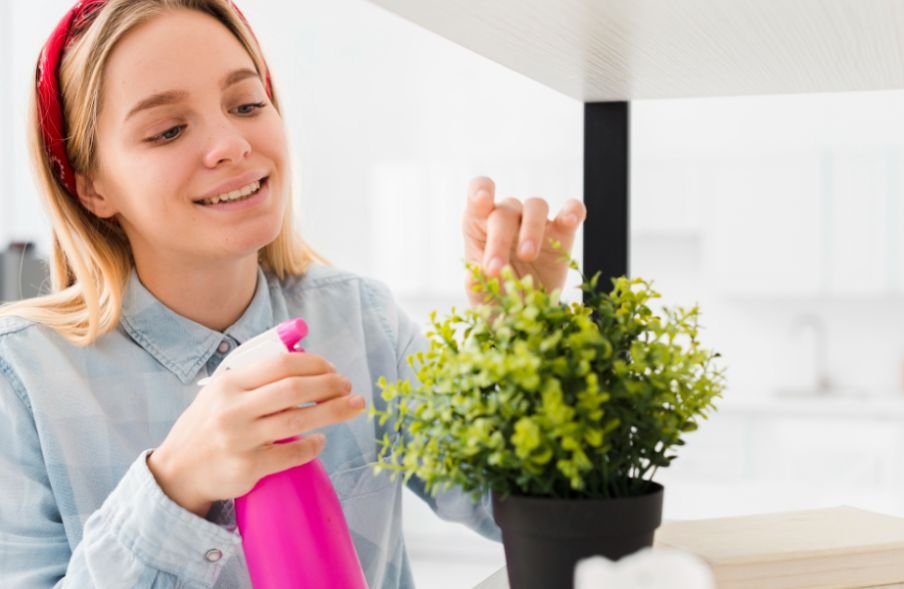
Check the Top Inch of Soil
Push your finger about one inch into the potting mix. If the soil feels dry at that depth, the herb probably needs water. If it feels cool and damp, check it again the following day.
Do not judge moisture only by looking at the surface. The top layer may appear dry while the root zone remains wet.
Lift the Container
Lift the pot shortly after watering so you can recognise its fully hydrated weight. Lift it again once the soil begins to dry. A noticeably lighter container usually indicates that much of its moisture has been used.
This method works particularly well with small and medium-sized pots.
Watch the Plant
Soft, drooping leaves can indicate thirst, especially when the soil is dry. However, wilting can also occur when waterlogged roots cannot absorb oxygen. Always check the soil before adding more water.
Dry, crispy leaf edges usually point to insufficient moisture. Yellowing leaves, mushy stems, fungus gnats, or a sour smell from the soil can indicate excessive watering.
How Often to Water Different Potted Herbs
Basil, Parsley and Cilantro
Basil, parsley, and cilantro prefer evenly moist soil. Check them frequently and water when the top inch begins to feel dry. They may need water two or three times weekly in moderate conditions and more frequently during hot weather.
Cilantro can struggle in prolonged heat, so moisture alone may not prevent wilting or early flowering.
Mint, Chives and Dill
Mint enjoys consistent moisture and can dry rapidly when confined to a small container. Chives and dill also perform best when their soil does not remain dry for extended periods.
These herbs may require frequent watering during active growth, particularly on sunny balconies and patios.
Rosemary, Thyme, Oregano and Sage
Mediterranean herbs prefer drier conditions and excellent drainage. Allow a greater portion of the potting mix to dry before watering them again.
Rosemary is especially vulnerable to wet roots. Giving it extra water because its leaves look narrow or firm can cause more damage than allowing the soil to dry slightly.
How Pots Affect Watering Frequency
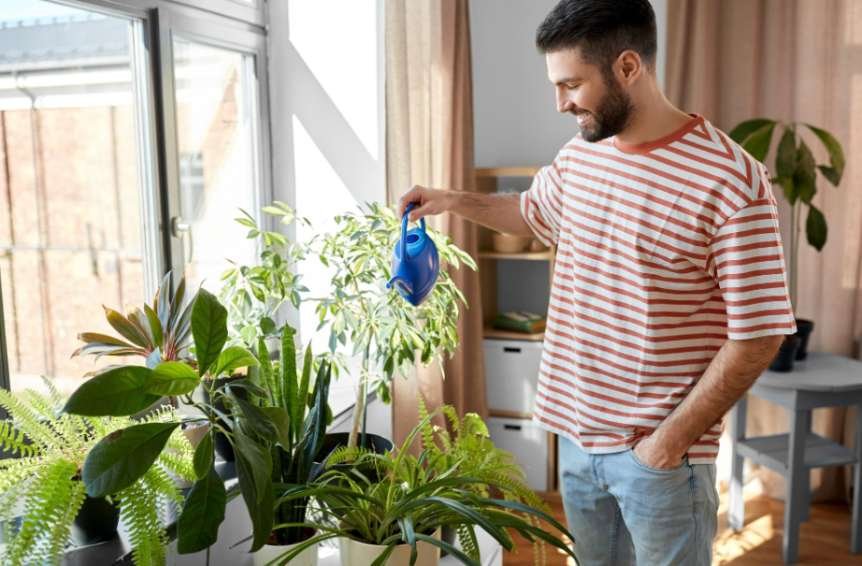
Small containers dry faster because they hold less soil and moisture. Large pots usually remain damp longer, although oversized containers can become waterlogged when filled with dense potting mix.
Terracotta is porous and allows moisture to escape through its walls. Herbs planted in terracotta may therefore need more frequent watering than herbs in plastic, glazed ceramic, or resin containers.
Every herb pot should have drainage holes. Decorative containers without drainage trap water around the roots and make it difficult to manage moisture safely. When using a decorative cover pot, remove the inner nursery pot before watering and allow it to drain completely.
Indoor vs Outdoor Herb Watering
Indoor herbs generally dry more slowly because they are protected from rain, wind, and intense midday sun. However, air conditioning, heating systems, and sunny windows can increase moisture loss.
Beginners may find moisture management easier when they start with easy herbs to grow indoors, since varieties such as mint, chives, parsley, and basil respond clearly to changes in soil moisture and household conditions.
Keep herbs away from heating vents and check pots near bright windows more frequently. Empty saucers after watering so the containers do not sit in standing water.
Outdoor herbs need closer observation. Hot temperatures, direct sunlight, dry air, and wind may cause small containers to dry within a day. During rainy periods, move sensitive Mediterranean herbs under cover when possible and make sure their drainage holes remain open.
The Right Way to Water Container Herbs
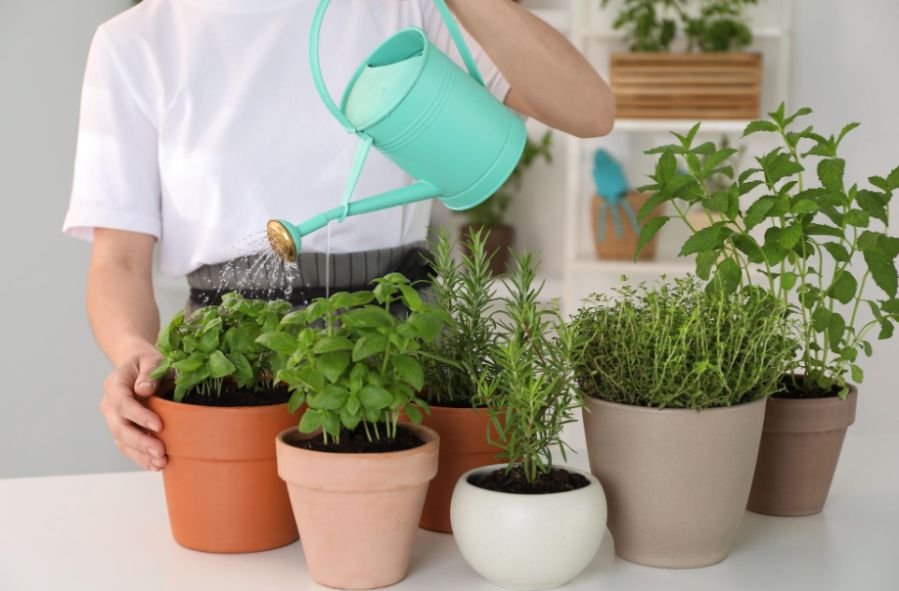
Water slowly at soil level until excess moisture flows through the drainage holes. This ensures that the entire root zone receives water instead of only the surface.
Avoid giving herbs small daily splashes. Shallow watering encourages roots to remain near the surface, where they dry quickly. A thorough soaking followed by an appropriate drying period promotes a stronger root system.
Morning is generally the best time to water outdoor herbs. The plants can absorb moisture before the hottest part of the day, while wet foliage has time to dry. When watering later, direct the water toward the soil rather than soaking the leaves.
Frequently Asked Questions
1. How often should you water potted herbs during summer?
Check them daily and water when the top inch of soil feels dry. Small outdoor containers may require daily watering during hot, sunny, or windy weather.
2. Should potted herbs be watered from the top or bottom?
Top watering is usually easiest because it flushes excess salts through the pot. Apply water slowly at soil level and allow the container to drain completely.
3. Can herbs recover from overwatering?
They may recover if the roots have not severely rotted. Stop watering, improve drainage, remove damaged roots or leaves, and allow the potting mix to dry.
4. Why does my herb wilt when the soil is still wet?
Constantly wet soil can deprive roots of oxygen and cause decay. Check the drainage holes and roots before adding more water.
Let Your Herbs Set the Schedule
I no longer treat watering day as a fixed appointment. I check the soil, lift the container, observe the leaves, and consider the weather before reaching for the watering can.
That simple habit has helped me avoid drowning rosemary, drying out basil, and guessing based on an unreliable weekly routine. Let each pot tell you what it needs, water thoroughly when the root zone begins to dry, and adjust as the plant, season, and environment change.