I didn’t think much about my backyard until I started spending a few quiet minutes there after work. At first, it was just a chair under a tree and a cup of coffee. Then I noticed something I hadn’t expected. I stopped checking my phone every few minutes, my mind felt less cluttered, and even the noise from the day seemed easier to leave behind. The space hadn’t changed much, but the way I felt in it certainly had.
That experience made me realize an outdoor space doesn’t have to be large or expensive to become restorative. A few thoughtful changes can turn an ordinary yard into a place where your body naturally relaxes, and your mind slows down. That’s what makes an outdoor wellness garden different. It isn’t designed only to look beautiful. It’s created to help you feel better every time you step outside.
What Makes an Outdoor Wellness Garden Different?
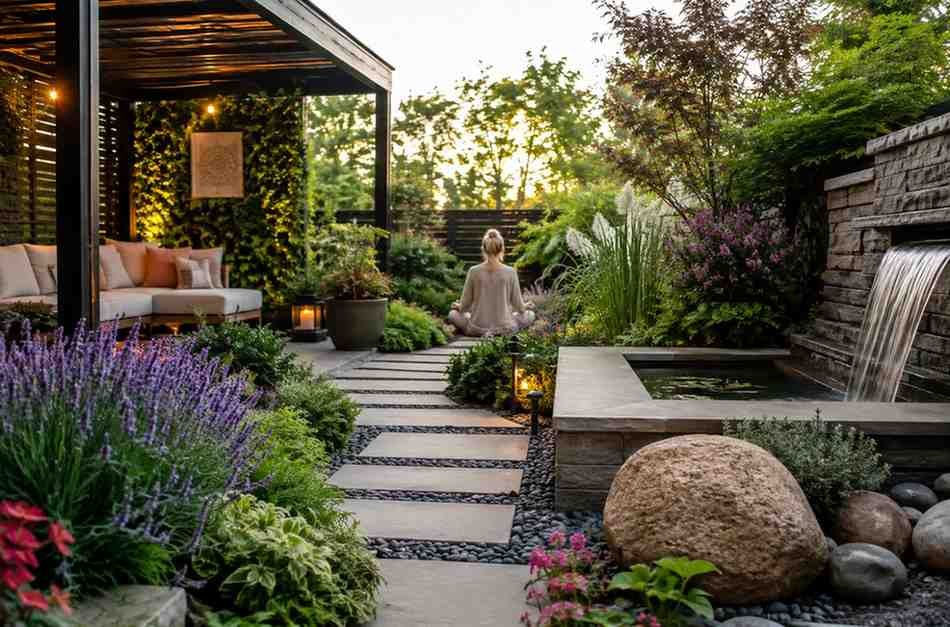
Most gardens are designed around appearance. They focus on colorful flowers, trimmed hedges, and decorative features that look great from the patio. An outdoor wellness garden takes a different approach by considering how every part of the space affects your body and mind.
Research has shown that spending time in nature can lower stress hormones, reduce blood pressure, and improve mood. Fresh air, natural light, greenery, and gentle movement work together to calm an overstimulated nervous system. Instead of constantly reacting to screens, traffic, and artificial lighting, your senses begin responding to softer, more natural surroundings.
The goal isn’t creating a luxury retreat. It’s designing a space that encourages you to pause, breathe, and recharge.
Start With the Senses Instead of the Scenery
One reason wellness gardens feel so calming is that they engage more than just your eyes. Every element contributes to the overall experience.
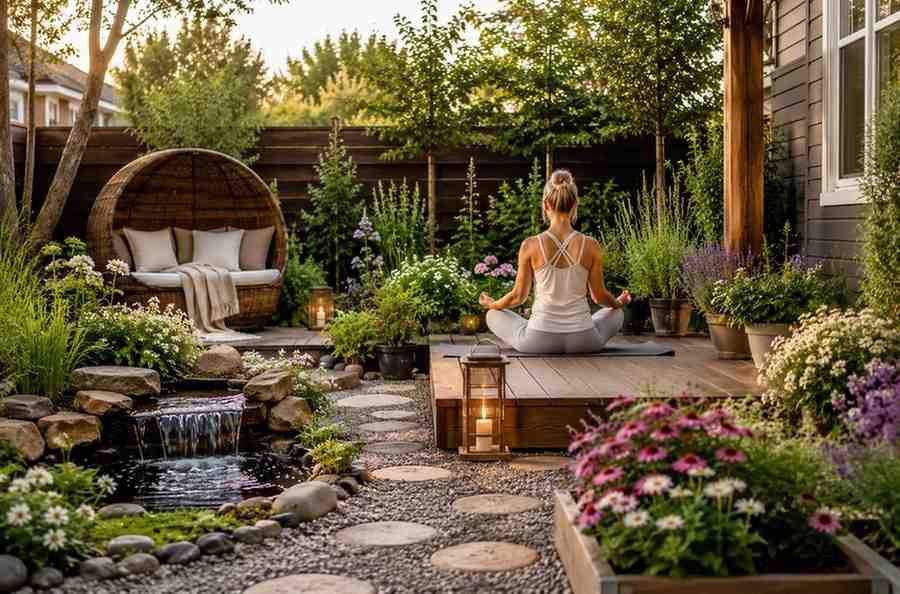
Natural sounds are often the first thing people notice. A small recirculating fountain or simple stone bubbler creates steady background noise that masks traffic and neighborhood distractions. Ornamental grasses planted along pathways sway with the breeze and add another layer of gentle sound without requiring much maintenance.
Fragrance also plays a bigger role than many homeowners realize. Lavender, rosemary, and lemon balm release calming oils when brushed or gently crushed, making them ideal near seating areas. If you enjoy spending evenings outdoors, climbing jasmine or wisteria can fill the air with fragrance after sunset, creating a completely different atmosphere from daytime.
Design Spaces That Invite You to Stay
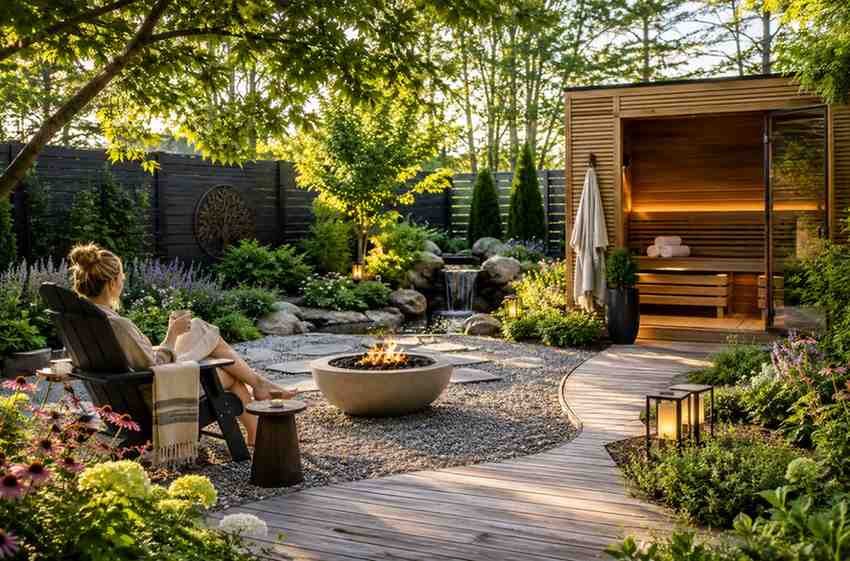
Many outdoor spaces go unused because they don’t encourage people to slow down. A wellness garden works best when every area has a purpose.
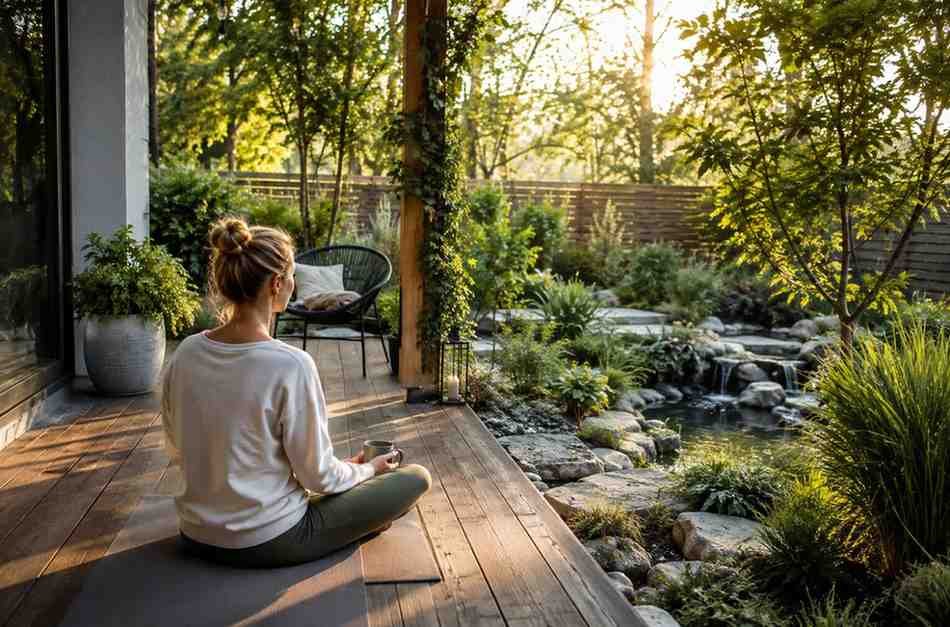
A comfortable chair beneath a tree becomes a reading spot. A small deck surrounded by greenery can double as a morning stretching area. Even a quiet corner with soft planting gives you somewhere to sit without feeling exposed.
Privacy matters just as much as comfort. Tall ornamental grasses, native shrubs, climbing vines, or a simple pergola help create natural boundaries. Feeling sheltered makes it much easier to relax because your attention stays on the environment rather than everything happening beyond it.
Create a Space That Supports Recovery
Outdoor wellness isn’t limited to quiet reflection. It can also help the body recover after physical activity.
More homeowners are adding cedar barrel saunas, compact cold plunge pools, or dedicated yoga platforms to their landscapes. Alternating heat and cold may help reduce muscle soreness after exercise, while a simple wooden deck surrounded by plants creates an inviting place for stretching, meditation, or breathing exercises.
You don’t need every feature to enjoy the benefits. Even setting aside one peaceful corner for movement and mindfulness creates a stronger connection between your outdoor space and your daily routine.
Let Nature Work With Your Daily Rhythm
The most effective wellness gardens follow natural patterns instead of fighting them.
A bench facing east becomes the perfect place to enjoy the morning sun, while an evening seating area positioned toward the west allows you to unwind as daylight fades. Spending time outside during sunrise or sunset helps support your body’s natural circadian rhythm, making it easier to feel alert during the day and relaxed at night.
Layering the landscape also makes a difference. Native trees provide long-term shade, shrubs add structure throughout the seasons, and fragrant herbs soften pathways while supporting pollinators. The result feels balanced without demanding constant maintenance.
Even if you have limited space, many of these ideas still work. People looking for apartment outdoor living ideas often discover that container gardens, folding furniture, fragrant herbs, and compact water features can create the same calming experience on a balcony or small patio.
Small Changes Often Leave the Biggest Impression
An outdoor wellness garden doesn’t come together overnight, and it doesn’t need to. Start by observing how sunlight moves across your yard, where you naturally like to sit, and which areas feel the most peaceful. Those simple observations often become the best blueprint for creating a space you’ll genuinely enjoy using.
The most successful wellness gardens aren’t the ones with the highest budget. They’re the ones that fit naturally into everyday life and quietly encourage you to spend a little more time outside.
FAQs: How an Outdoor Wellness Garden Can Change the Way You Unwind
1. What is an outdoor wellness garden?
An outdoor wellness garden is a space designed to support relaxation through natural elements like plants, water, shade, fragrance, and comfortable seating rather than focusing only on appearance.
2. Do I need a large backyard to create one?
No. A small patio, balcony, courtyard, or compact garden can provide many of the same wellness benefits with thoughtful planning.
3. Which plants work well in a wellness garden?
Lavender, rosemary, lemon balm, jasmine, ornamental grasses, native shrubs, and flowering plants that attract birds and pollinators are all excellent choices.
4. How can I start without spending a lot?
Begin with one seating area, a few fragrant plants, and simple pathways. You can expand the space over time as your needs and budget grow.
The Best Outdoor Spaces Are the Ones You Actually Use
A wellness garden isn’t measured by the number of plants you own or how closely it resembles a magazine landscape. Its value comes from how it makes you feel after spending ten quiet minutes outdoors. When the space encourages you to slow down, breathe deeply, and disconnect from constant distractions, it’s already doing exactly what it was designed to do.
Sometimes the most meaningful upgrade to your home isn’t another room. It’s rediscovering the one waiting just outside your door.