Fresh basil beside the stove and mint ready for evening tea can make an ordinary kitchen feel more alive. Learning how to grow herbs indoors year round helped me stop buying oversized herb bundles that wilted before I could use them. With suitable light, drainage, and regular harvesting, an indoor edible garden can remain productive in every season.
Key Takeaways
- Start small: Choose three easy herbs.
- Add light: Winter windows may be insufficient.
- Drain well: Never leave roots sitting in water.
- Harvest often: Regular trimming encourages fresh growth.
- Replant wisely: Short-lived herbs need repeat sowing.
Pick Herbs That Suit Your Home
The best indoor herb garden begins with plants that match your available light, room temperature, cooking habits, and experience.
Begin With Reliable Herbs
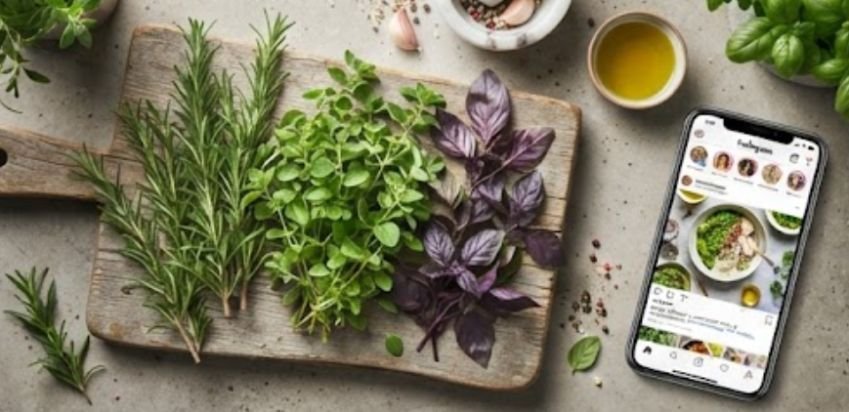
Mint, chives, parsley, thyme, oregano, and rosemary are dependable choices for beginners. Mint tolerates slightly lower light and enjoys evenly moist soil, while thyme and oregano prefer brighter conditions and drier roots.
Basil is productive and useful, but it needs warmth and strong light. Rosemary also needs excellent drainage and good air circulation. Growing each herb in a separate pot makes care easier because their moisture needs differ.
Understand Short-Lived Herbs
Cilantro and dill grow quickly, but one plant will not produce leaves forever. Both naturally mature, flower, and set seed. Once this happens, their leaf quality and flavor decline.
For a steady supply, sow a small batch of cilantro or dill every three to four weeks. This method, known as succession sowing, keeps younger plants developing as older ones finish.
Match Herbs to Your Cooking
Grow plants you regularly use rather than choosing herbs only because they look attractive. Basil suits pesto and pasta, cilantro works well in salsa, parsley freshens soups and salads, and rosemary adds flavor to roasted vegetables.
Starting with three or four favorites keeps the garden manageable. Once those plants are healthy, you can add less familiar options such as sage, chervil, marjoram, or lemon balm.
Build the Right Indoor Setup
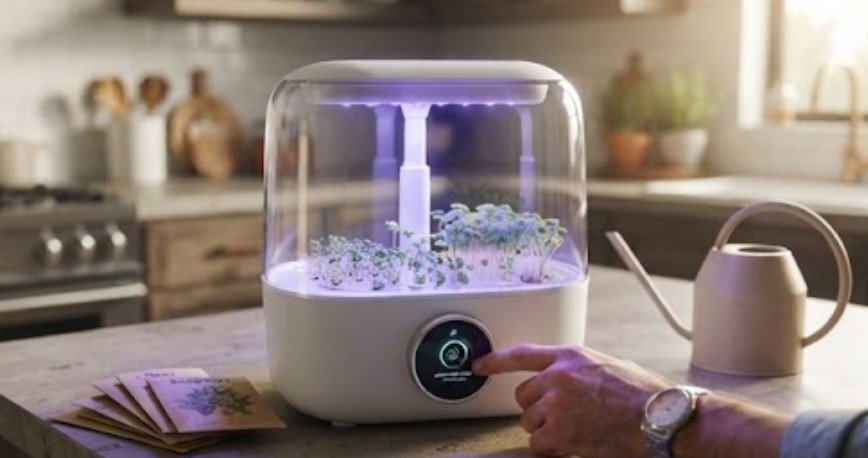
Your growing area does not need to be expensive, but it must provide light, drainage, airflow, and enough room for each plant.
Choose Pots With Good Drainage
Always use containers with drainage holes to prevent water from collecting around the roots, which can lead to root rot. Small 4- to 6-inch pots are suitable for young herbs, while larger varieties like rosemary, basil, and mint will eventually need bigger containers. Terra-cotta pots are ideal for drought-tolerant herbs, whereas plastic or glazed ceramic pots retain moisture better for herbs that prefer consistently damp soil.
Use Quality Potting Mix
Avoid using garden soil indoors, as it compacts easily and may introduce pests or diseases. Instead, choose a lightweight potting mix designed for containers. Mixing in perlite improves drainage, especially for herbs like rosemary, thyme, oregano, and sage.
Grow Herbs in Separate Pots
Planting herbs individually makes watering, repotting, and disease management much easier since different herbs have different moisture needs.
Give Herbs Enough Light
Light is the factor most likely to determine whether indoor herbs grow thick and flavorful or become pale and weak.
Test Your Window First
Watch your chosen windowsill for a full day before placing plants there. Most culinary herbs perform best with at least six hours of strong light, and a south-facing window generally provides the best winter exposure.
A west-facing window may work for mint, parsley, and chives. However, window direction alone does not guarantee enough light. Nearby buildings, trees, screens, and cloudy winter weather can reduce its intensity.
Penn State Extension recommends about six hours of direct sunlight for most herbs and suggests using a sunny southern exposure where possible. Read its indoor herb guidance.
Add a Grow Light
A full-spectrum LED grow light offers the most dependable way to maintain a year-round kitchen garden. Position it above the plants rather than beside them so stems grow upright.
Run the light on a timer for roughly 12 to 14 hours daily, then give plants a dark resting period. The University of Minnesota Extension notes that around 12 hours of artificial light can support many indoor herbs. Explore its herb-growing recommendations.
Follow the manufacturer’s recommended hanging height because light strength varies by fixture. Raise the lamp as the plants grow to prevent scorched leaves.
Read the Plant’s Signals
Long stems, wide gaps between leaves, pale color, and plants leaning toward a window commonly indicate insufficient light. Move the herbs closer to the light source or extend the lighting period gradually.
Brown, bleached patches may indicate that a powerful lamp is too close. Raise it slightly and observe new growth rather than expecting damaged leaves to recover.
Keep the Harvest Coming
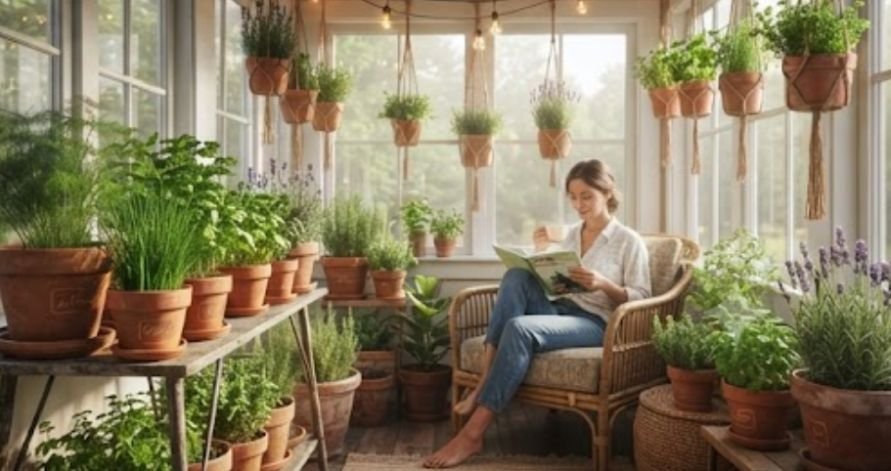
Continuous production depends on careful feeding, timely pruning, and replacing plants that naturally reach the end of their cycle.
Feed Lightly
Indoor herbs generally grow more slowly than outdoor plants, so heavy feeding is unnecessary. Too much fertilizer can produce weak growth and may reduce the concentrated flavor gardeners want from culinary herbs.
During active growth, apply a balanced liquid fertilizer at half the label strength every four to six weeks. Reduce feeding when growth slows in winter unless the plants are under strong grow lights and remain actively productive.
Harvest for Regrowth
Never remove most of a young plant at once. Begin with small harvests after the herb has developed enough healthy growth to recover.
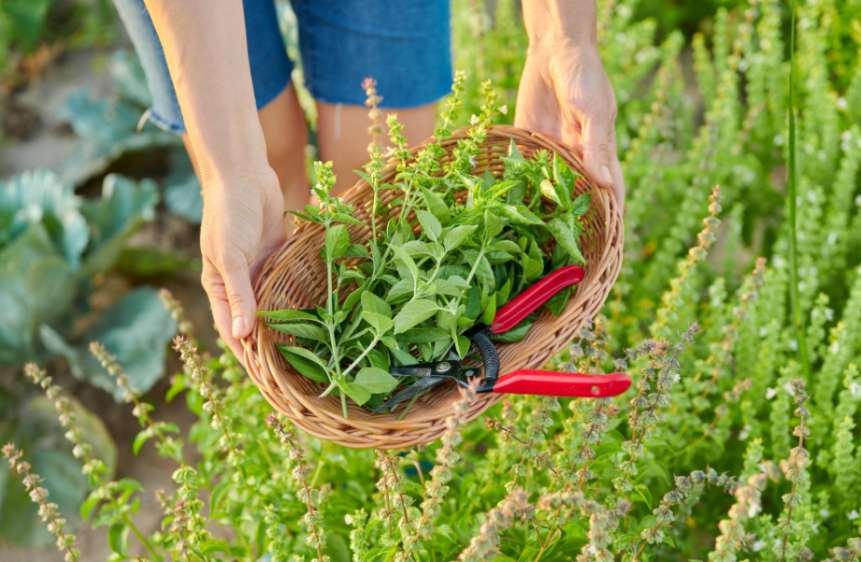
Pinch basil just above a pair of leaves to encourage two new branches. Cut chives near the base while leaving some growth behind. Harvest parsley from the outer stems first, and trim thyme, mint, oregano, and rosemary from healthy stem tips.
Remove basil flower buds early if you want continued leaf production. Regular trimming keeps many herbs compact and prevents them from becoming woody or top-heavy.
Replant on Schedule
Perennial herbs such as rosemary, thyme, oregano, mint, and chives may remain productive for a long time with proper care. Basil can also live indoors for months, although older plants often become woody.
Cilantro, dill, and chervil are better managed as repeating crops. Sow new containers regularly instead of trying to keep one aging plant alive indefinitely.
Adjust Care Through the Seasons

Indoor conditions still change throughout the year, even though the herbs remain protected from outdoor frost and extreme heat.
Manage Winter Conditions
Short winter days usually require supplemental lighting. Keep tender herbs away from cold window glass, exterior doors, and chilly drafts. Basil is especially sensitive to low temperatures.
Heating systems can dry the air and soil. Grouping plants can slightly increase local humidity, but keep enough space between them for airflow. A small humidifier may help in very dry homes.
Avoid compensating for dry air by keeping the soil constantly wet. Root health depends on correct soil moisture, while leaf humidity is a separate issue.
Handle Summer Heat
Strong summer sunlight passing through glass can overheat leaves and containers. Move herbs a few inches back from the window or use a sheer curtain during the hottest part of the day.
Plants may need more frequent watering in July because warmer conditions increase moisture loss. Check the potting mix more often rather than following a fixed calendar.
Rotate and Inspect Weekly
Turn containers one-quarter rotation each week so every side receives light. While rotating them, inspect the tops and undersides of leaves for pests.
Also look for roots emerging through drainage holes, compacted soil, salt buildup, and stems leaning toward the light. Early correction is easier than rescuing a severely stressed plant.
Frequently Asked Questions
1. What Herbs Can I Grow Indoors All Year-Round?
Mint, chives, parsley, thyme, oregano, rosemary, sage, and basil can grow indoors throughout the year. Cilantro and dill also work, but need regular reseeding.
2. Can You Grow Herbs in the House All Year Long?
Yes. Provide bright natural light or an LED grow light, suitable containers, well-draining potting mix, proper watering, airflow, and occasional feeding.
3. What Are Common Mistakes Growing Indoor Herbs?
The most common mistakes are overwatering, weak lighting, pots without drainage, crowding incompatible herbs together, excessive fertilizer, and harvesting too much growth at once.
4. Is July Too Late to Grow Herbs?
No. July is suitable for starting indoor herbs because household conditions can be controlled. Fast-growing basil, cilantro, dill, mint, parsley, and chives can all be planted during summer.
Fresh Herbs, One Simple System
Knowing how to grow herbs indoors year round is less about having a perfect green thumb and more about creating repeatable habits. Give each herb its own draining pot, provide reliable light, water according to the soil, and harvest little and often. Start with a few forgiving plants, learn their signals, and expand your edible windowsill as your confidence grows.