Fresh herbs make meals special, so pest damage feels personal. My first concern with using neem oil on edible herbs was not only whether it would remove aphids, but whether the leaves would stay healthy, flavorful, and suitable for the kitchen.
Neem oil can help with selected pests, but formulas and harvest rules vary. Safe use depends on label directions, correct dilution, patch testing, careful timing, and thorough washing.
Key Takeaways
- Read the label first.
- Dilute accurately.
- Patch-test one leaf.
- Avoid heat and flowers.
- Wash harvested herbs before eating.
Benefits of Neem Oil on Herbs
Using neem oil on edible herbs is worth understanding because nobody wants aphids as a surprise garnish. Herb leaves are often eaten raw, so careless spraying can affect foliage, flavor, pollinators, and harvest timing. A treatment that suits a rose may scorch cilantro or leave basil unpleasantly oily.
Good pest control means identifying the pest, choosing a suitable product, and treating only affected areas. This protects useful insects, reduces waste, and keeps the garden productive.
Understanding Neem Oil
Neem products do not all work the same way. Clarified hydrophobic neem oil mainly coats soft-bodied pests, while products containing azadirachtin may disrupt feeding, growth, and reproduction. Common targets include aphids, whiteflies, spider mites, thrips, mealybugs, and some young caterpillars.
Some products are also labeled for powdery mildew, rust, and leaf spots. Neem will not repair damaged foliage or cure every disease, so inspect plants before reapplying.
Check The Product Type
Ready-to-use sprays, concentrates, cold-pressed oils, and azadirachtin products are not interchangeable. Their approved crops, mixing rates, application limits, and pre-harvest intervals may differ, so a universal online recipe can be unsafe or ineffective.
The product label controls safe use. The National Pesticide Information Center and EPA pesticide label database provide dependable guidance on registered directions.
Identify The Problem
Inspect leaf undersides, tender stems, and new growth. Aphids gather in clusters, whiteflies rise when disturbed, and spider mites may leave pale speckles or fine webbing. Old holes do not prove that a pest is still present.
Wind, sunscald, drought, overwatering, and nutrient stress can resemble insect injury. Correct identification prevents needless spraying and further plant stress.
Start Gently
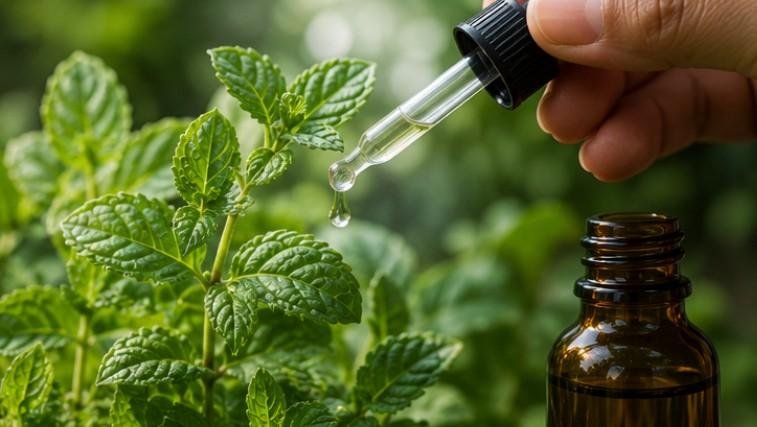
Water, hand removal, pruning, insect netting, sticky traps, and better airflow may solve a small infestation without leaving residue.
Neem makes more sense when pests return, damage is increasing, and the label lists both the herb and target pest. Routine preventive spraying is rarely needed in a healthy kitchen garden.
Protect Sensitive Herbs
Basil, cilantro, dill, parsley, chervil, fennel foliage, and young chives can develop pale patches, brown edges, curling, or leaf drop after a strong or badly timed oil spray.
Rosemary, sage, bay, oregano, mint, and thyme may be tougher, but heat, drought, intense sun, excessive concentration, or repeated spraying can still burn mature foliage.
Handle Seedlings Carefully
Seedlings have thin leaves and limited energy. Avoid neem unless the label permits that growth stage; rinsing, isolation, or labeled insecticidal soap may be safer.
Cultivars may react differently within the same herb species. Success on one basil plant does not guarantee the same response from another, which makes patch testing important every time.
Using Neem Oil On Edible Herbs Correctly
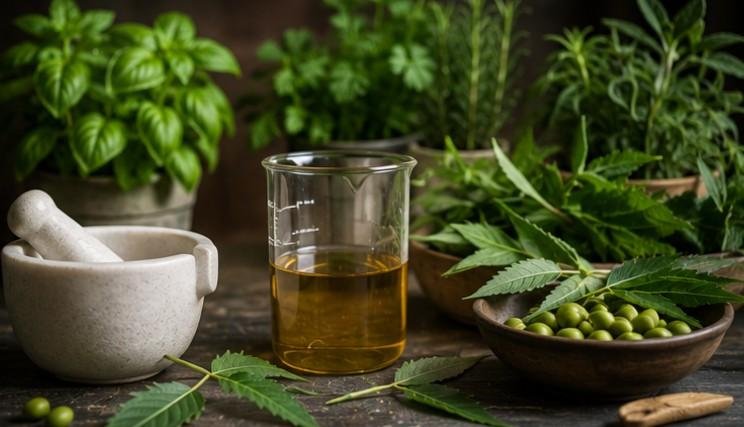
Using neem oil on edible herbs starts with the label, not the sprayer. Confirm the crop and pest, note the pre-harvest interval, wear required protection, and measure concentrate exactly. Add water and mild soap only when the label directs you to use an emulsifier.
Mix only what you need. Excess oil can leave residue and raise burn risk, so keep the mixture evenly combined as directed.
Run A Patch Test
Treat one small leaf or stem and wait at least twenty-four hours, or longer when directed. Check for spotting, curling, discoloration, or wilting before treating more of the plant.
Testing is vital for delicate herbs, seedlings, transplants, and plants recovering from heat or water stress.
Spray At The Right Time
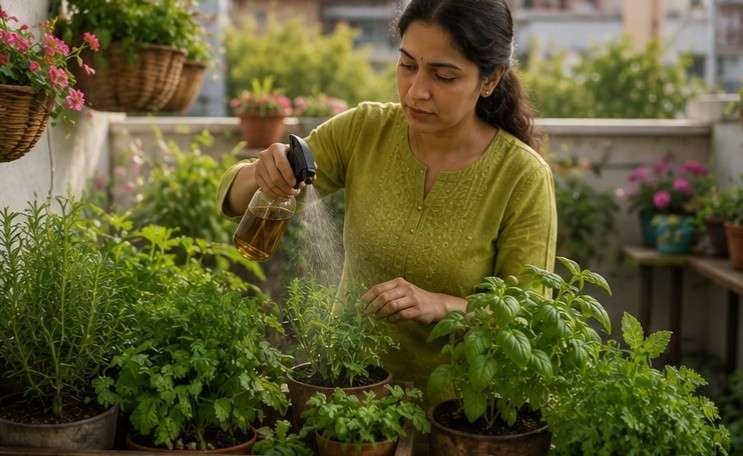
Apply during the cool evening or early morning, following the label. Avoid midday sun, extreme heat, wind, rain, drought stress, and recently saturated foliage.
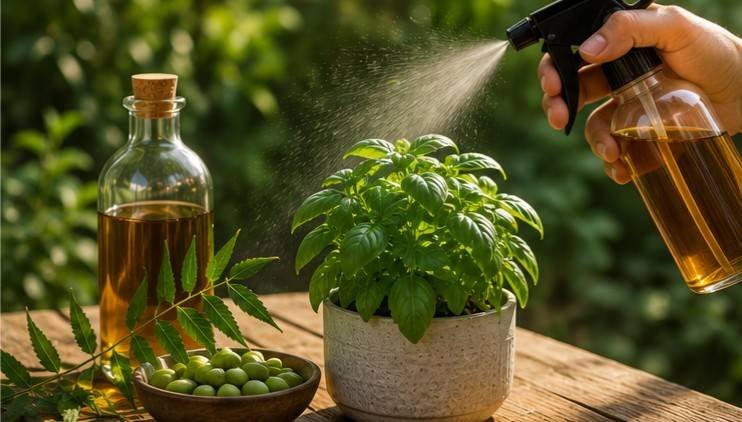
Lightly coat affected stems and leaf surfaces without dripping. Target pest locations and reapply only at the permitted interval.
Protect Flowers And Pollinators
Flowering basil, mint, oregano, thyme, rosemary, sage, cilantro, dill, fennel, and chives attract bees. Do not spray open flowers or apply neem while pollinators are visiting.
Evening treatment reduces direct exposure, but residue may remain. Target nonflowering foliage or use pruning where bees visit heavily.
Control Spray Drift
Use a controlled nozzle on a calm day and shield nearby flowers with cardboard. Keep neem, spills, and rinse water away from ponds, drains, and streams because some formulations can harm aquatic organisms.
Spot treatment protects helpful lady beetles and lacewings better than spraying healthy plants.
Harvest And Wash Safely
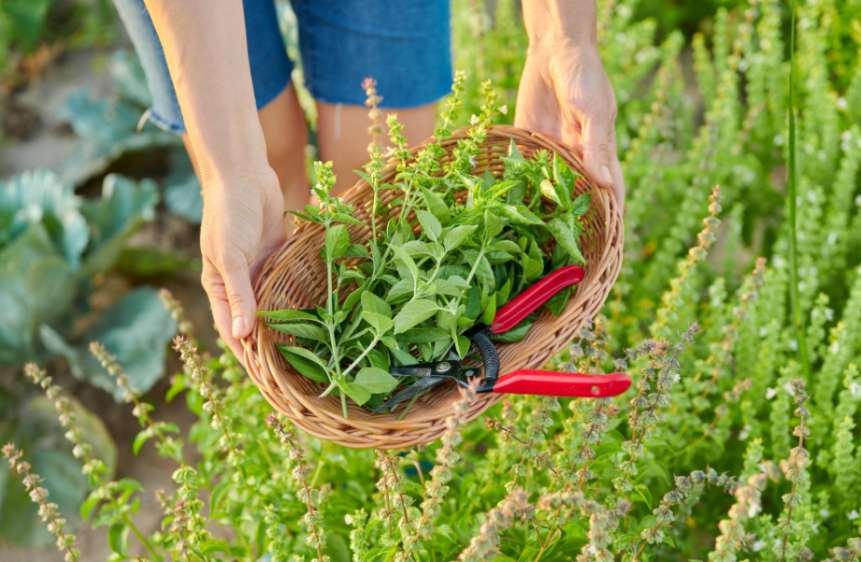
Pre-harvest intervals differ, so never replace the bottle’s direction with a general online claim. Harvest mature leaves before treatment when practical to reduce residue and waste.
Clean Leaves Well
Rinse sturdy herbs under cool running water while gently rubbing the surfaces. Swish delicate herbs in a clean bowl, drain, repeat with fresh water, and dry with a clean towel or salad spinner.
Washing does not replace the harvest interval. Discard greasy, unusual-smelling, or badly damaged leaves.
Repair Leaf Burn
Neem injury may appear as pale patches, dark speckles, crisp edges, curling, wilting, or sudden leaf drop. Symptoms often become noticeable after treated foliage receives strong sunlight.
Stop spraying, move container herbs away from harsh afternoon sun, maintain even soil moisture, and remove only badly damaged or rotting leaves. Partly green foliage can still help the plant recover.
Change The Treatment
Wait for healthy growth before applying another pesticide. Use water, pruning, hand removal, netting, or labeled insecticidal soap instead. Combining treatments can add stress. Correct watering, spacing, clean tools, harvesting, and airflow reduce future problems.
Frequently Asked Questions
1. Which Plants Should You Not Use Neem Oil On?
Avoid crops absent from the label, severely stressed plants, tiny seedlings, and delicate herbs unless a patch test shows no injury after at least twenty-four hours.
2. Is Neem Oil Safe To Spray On Basil?
It may be safe when the label permits basil. Patch-test first, avoid hot sunlight, follow harvest directions, and wash treated leaves thoroughly before use.
3. Can You Use Neem Oil On Edibles?
Yes, using neem oil on edible herbs and vegetables can be acceptable when the product lists those crops and all dilution, timing, application, and harvest instructions are followed.
4. Can You Eat Veggies That Have Been Sprayed With Neem Oil?
Yes, after observing the labeled pre-harvest interval. Rinse produce thoroughly under clean running water and discard vegetables with stubborn oily residue or obvious spray damage.
Keep Bugs Out And Flavor In
Simillarly, you can harvest basil for continuous growth. And using neem oil on edible herbs protects flavor, pollinators, plant health, and harvest quality. Identify the pest, follow the label, dilute accurately, patch-test, spray in cooler hours, and wash every harvest. Used with restraint, neem can support an edible garden without becoming the automatic answer to every spotted leaf or visiting insect.