I once assumed that growing fresh herbs required a large garden, rich soil, and plenty of spare time. Container gardening changed my mind completely. By choosing the best herbs to grow in containers outdoors, I can transform a patio, balcony, courtyard, or sunny doorstep into a productive kitchen garden without digging a traditional bed.
Pots give me greater control over drainage, soil, sunlight, and spacing. They also help contain aggressive plants, protect delicate herbs during difficult weather, and keep fresh ingredients close to the kitchen.
Why Grow Herbs in Outdoor Containers?
Many culinary herbs have manageable root systems and respond well to frequent harvesting. Containers are especially useful when garden soil is compacted, poorly drained, or unavailable.
Potted herbs can also be moved as growing conditions change. Sun-loving varieties can occupy the brightest area, while parsley, mint, chives, and cilantro can receive afternoon shade during intensely hot weather.
A thoughtfully arranged herb garden can also become one of the outdoor spaces that improve wellbeing by adding greenery, fragrance, and a calming daily gardening routine to a balcony, patio, or courtyard.
How to Choose Outdoor Herbs and Pots
Consider sunlight, mature size, moisture requirements, and growth habits before planting. Most culinary herbs need around six hours of direct sunlight, although several varieties tolerate partial shade. These conditions are also worth considering when choosing vegetables to grow in partial shade for the same outdoor space.
Small herbs such as thyme and chives can grow in pots measuring 8 to 10 inches wide. Basil, parsley, oregano, and sage usually need 10- to 12-inch containers. Rosemary, mint, dill, and bay grow better in deeper pots with more soil.
Every container should have drainage holes. Trapped water can suffocate roots and cause rot, even when the leaves initially appear healthy.
Top Herbs for Outdoor Containers
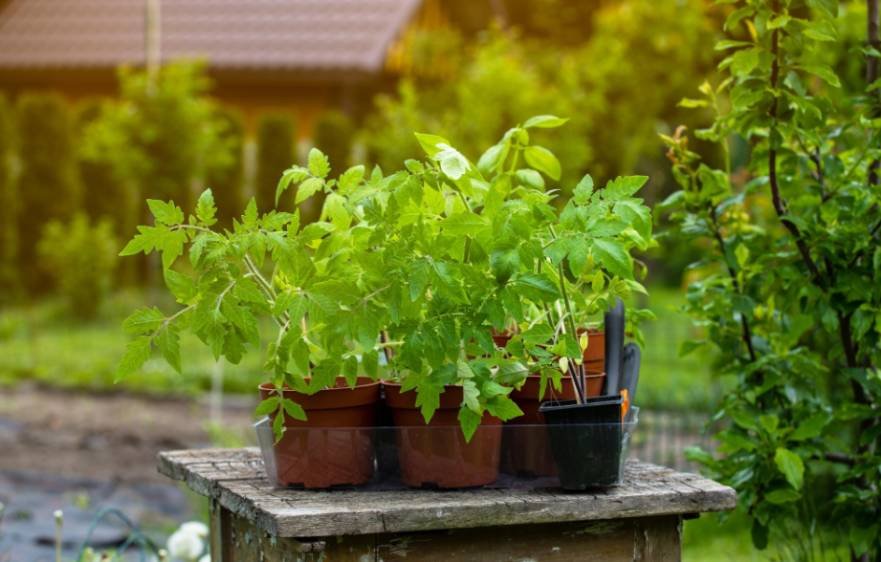
Basil
Basil grows quickly and becomes bushier when harvested regularly. Place it in full sun, with some afternoon shade during extreme heat.
Use a pot at least 10 inches wide, keep the soil lightly moist, and pinch off flower buds to promote continued leaf production.
Mint
Mint is ideal for containers because pots prevent its vigorous roots from spreading across the garden. Grow it alone in a container at least 12 inches wide.
It prefers consistently moist soil and performs well in full sun or partial shade. Frequent trimming keeps the plant compact.
Rosemary
Rosemary prefers warmth, bright sunlight, and fast-draining soil. Choose a deep, heavy container that will not tip over as the plant grows.
Allow the upper soil to dry slightly before watering. Constantly wet roots are more dangerous to rosemary than brief periods of dryness.
Thyme
Thyme is compact, drought-tolerant, and suitable for small patios or balconies. Give it full sun and loose, well-draining soil.
Water only when the upper layer feels dry. Light trimming after flowering helps the plant remain dense and productive.
Oregano
Oregano develops strong flavor when grown in bright sunlight. Use a pot at least 10 inches wide and avoid overly rich soil, which can create soft growth with weaker flavor.
Harvest stems before the flowers fully open. Regular trimming prevents the plant from becoming woody.
Parsley
Parsley has deeper roots than its compact foliage suggests. Choose a container around 10 to 12 inches deep.
Keep the soil evenly moist and harvest the outer stems near the base. This allows new leaves to continue developing from the center.
Chives
Chives are dependable, space-saving herbs that perform well in smaller containers. They tolerate cooler weather and partial sunlight.
Cut leaves near the base when harvesting. Removing fading flowers directs the plant’s energy back into fresh foliage.
Sage
Sage prefers full sun, moderate watering, and good air circulation. Plant it in a medium-sized container filled with free-draining potting mix.
Avoid keeping the roots constantly wet. Prune established plants lightly in spring to control woody growth.
Cilantro
Cilantro grows best during cooler weather and may flower quickly in high temperatures. Give it morning sunlight and afternoon shade.
Sow seeds directly in a deep container every few weeks. This succession planting method provides a steadier supply of leaves.
Dill
Dill develops a long taproot, so it needs a container at least 12 inches deep. Place it in full sun but protect its tall stems from strong winds.
Sow dill directly in its final pot because established plants dislike root disturbance.
Lavender
Lavender thrives in sunny, dry spaces. Terra-cotta pots are useful because their porous sides allow moisture to evaporate.
Use gritty, fast-draining soil and avoid frequent watering. Trim lightly after flowering to preserve a tidy shape.
Bay Laurel
Bay laurel is a slow-growing herb that can remain in a container for several years. Use a sturdy pot and water when the upper soil begins to dry.
Its container can be moved into a sheltered position during frost or severe cold.
Which Herbs Can Grow Together?
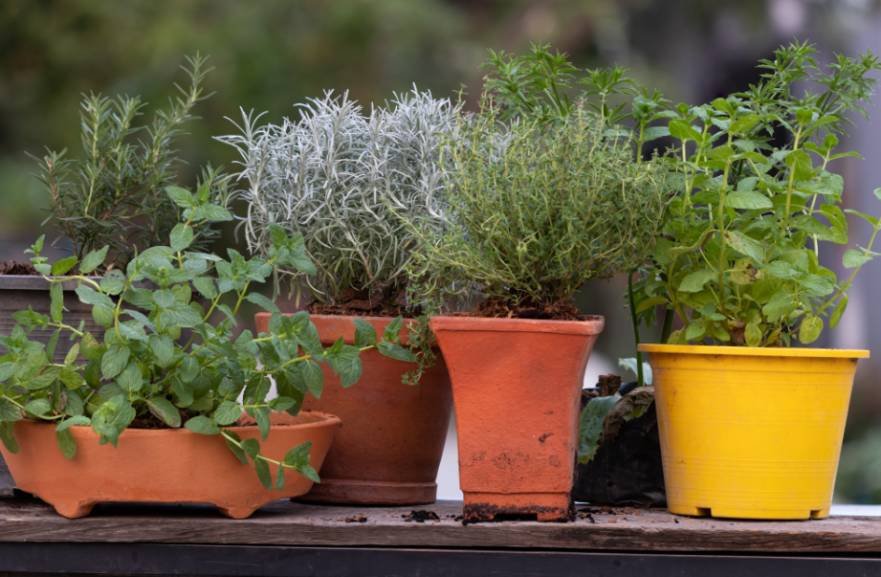
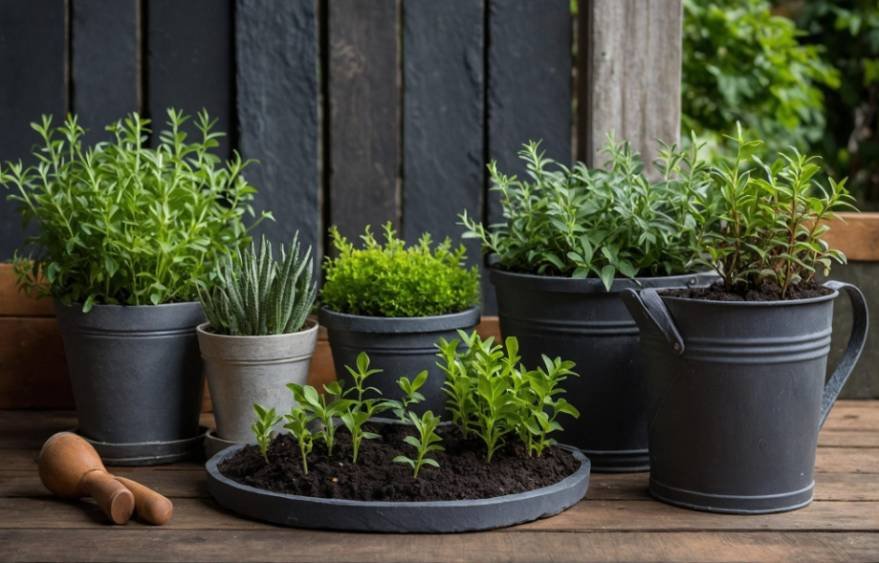
Combine herbs that share similar sunlight and moisture needs. Rosemary, thyme, oregano, sage, and lavender enjoy bright light and relatively dry soil, making them suitable companions in a large planter.
Basil, parsley, chives, and tarragon prefer more consistent moisture. Mint and lemon balm should usually grow alone because their spreading roots can overwhelm neighboring plants.
Best Soil and Watering Routine
Use fresh potting mix instead of ordinary garden soil. Garden soil may become dense inside a pot, restricting airflow and drainage. Perlite or fine grit can help excess water escape.
Check the soil before watering. Small containers may dry quickly during hot or windy conditions, while larger pots retain moisture longer. Water deeply until liquid drains from the bottom rather than applying small amounts to the surface.
How to Maintain a Productive Herb Garden
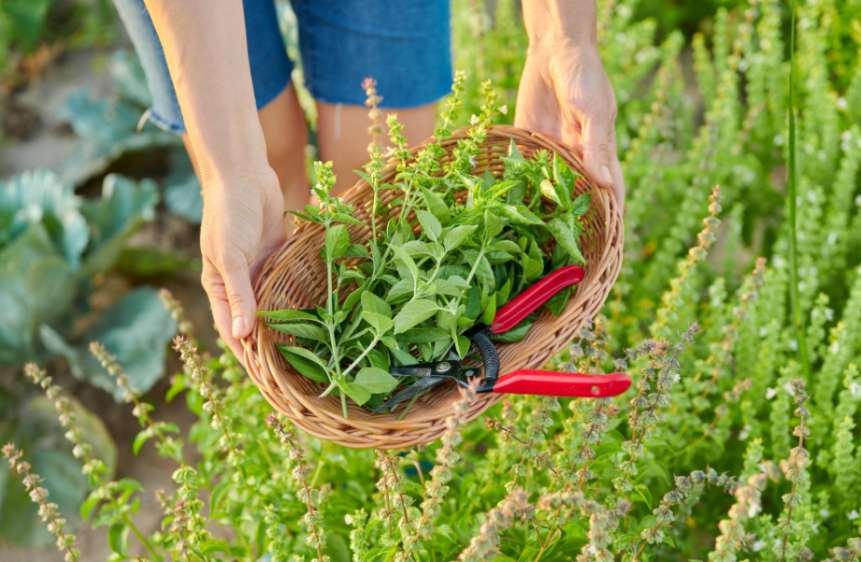
Harvest herbs regularly, but avoid removing most of a young plant at once. Pinching basil, mint, oregano, and thyme encourages branching and produces fuller plants.
Rotate pots occasionally so every side receives adequate light. Remove flowers when leaves are the main harvest, especially on basil. Apply fertilizer sparingly because excessive feeding can create weak foliage with reduced flavor.
Arranging the containers with comfortable seating, clear pathways, and easy access can also help create an outdoor wellness garden that supports relaxation while keeping routine herb care simple.
Frequently Asked Questions
1. What are the best herbs to grow in containers outdoors for beginners?
Basil, mint, chives, parsley, oregano, and thyme are reliable choices because they adapt well to pots and recover quickly after harvesting.
2. Do outdoor container herbs need full sun?
Most herbs prefer at least six hours of direct sunlight, although parsley, mint, chives, and cilantro can tolerate partial shade.
3. How often should potted herbs be watered?
Water when the upper inch of soil feels dry. Temperature, wind, rainfall, pot size, and the herb’s natural moisture preference affect frequency.
4. Can container herbs survive cold weather?
Hardy herbs may survive mild winters, while tender varieties often need frost protection or temporary shelter in a bright, cool location.
Fresh Herbs, Small Space, Big Reward
Growing herbs in containers has made fresh ingredients easier for me to manage and enjoy. I can adjust each plant’s position, control its moisture, and harvest only what I need.
A productive herb garden does not require a large yard. With suitable pots, healthy soil, good drainage, sufficient light, and regular trimming, a small collection of herbs can provide flavor and fragrance throughout the growing season.