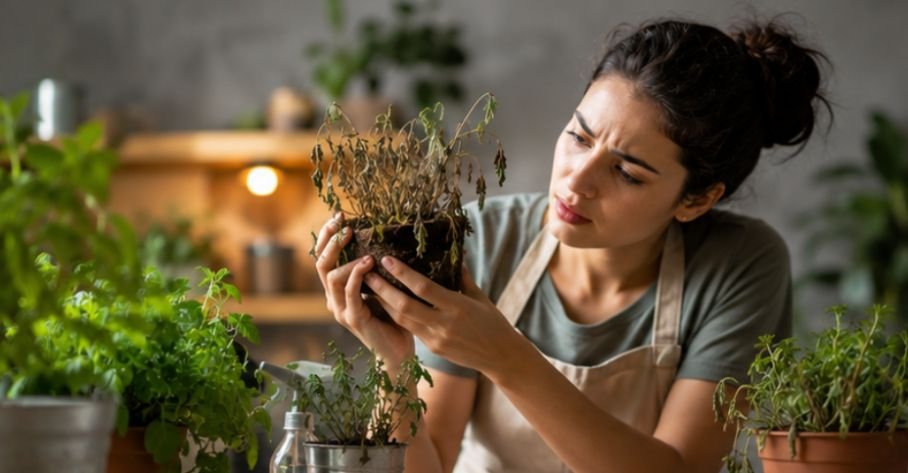
A drooping basil pot once turned my kitchen into a tiny plant emergency room. Learning how to revive dying herb plant helped me read the signs instead of guessing. With the right fix and patience, many culinary herbs can recover.
Knowing how to revive dying herb plant can save dinner, money, and gardening pride. That sad parsley pot may still have healthy roots, while dramatic basil may simply be thirsty. A quick check often reveals whether the plant needs water, drainage, pruning, or time.
It also prevents panic care. Flooding, fertilizing, and moving the pot into harsh sun together can create more stress.
Key Takeaways
- Check soil moisture before watering.
- Trim only dead growth.
- Remove rotten roots before repotting.
- Use bright indirect light during recovery.
- Wait three to four weeks before fertilizing.
Fix The Water Balance
Wilting can signal either too much or too little water.
Rescue Dry Soil
Push a finger one to two inches into the potting mix. If it feels dusty and has pulled from the pot’s sides, water may be running past the root ball instead of soaking it.
Place the pot in a bowl of room-temperature water for 20 minutes. Remove it and let it drain fully. Basil, parsley, mint, and cilantro may begin lifting their leaves within hours.
Stop Soggy Soil Damage
Wet soil, yellow leaves, soft stems, and a sour smell often indicate overwatering. Stop watering, empty the saucer, and move the herb to a bright area with gentle airflow.
Avoid intense midday sun because damaged roots cannot replace moisture quickly. Wait until the upper soil begins drying before checking again.
Inspect And Clean The Roots
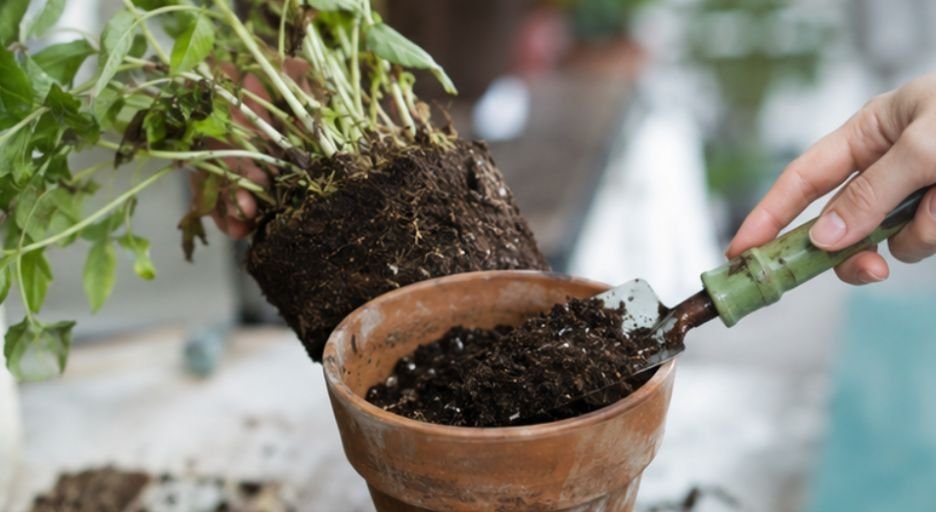
Root health determines whether recovery is possible.
Unpot The Herb
Support the base, slide out the root ball, and brush away loose soil gently. Healthy roots feel firm and are often white, cream, or tan. Judge darker roots by texture and smell.
Trim Root Rot
Cut away roots that are black, mushy, hollow, or foul-smelling. Use clean scissors and sanitize them before and after trimming. Keep every firm root section that appears healthy. If many roots are damaged, remove a little top growth, but keep enough green foliage for energy.
Repot In Fresh Mix
Choose a clean pot with drainage holes and fresh, well-draining mix. Avoid compacted garden soil. Set the herb at its previous depth and water lightly to settle the mix. Let excess moisture drain and never leave the pot standing in water.
Prune And Adjust The Setting
Next, remove damage and create a stable recovery space.
Remove Dead Parts
Cut off fully brown, black, slimy, or brittle leaves and stems. Make each cut above healthy green tissue or a living node.
Avoid heavy pruning unless disease is spreading. Slightly damaged green leaves can still produce energy, so remove no more than one-third of living growth at once.
Provide Gentle Light
Give the herb bright, indirect light and keep it away from heaters, cold windows, and hot appliances.
After new shoots appear, gradually return sun-loving herbs to stronger light. Sudden exposure can scorch tender leaves.
Skip Fertilizer
Do not feed a rescued herb for three to four weeks. Weak roots cannot process fertilizer well, and mineral salts may cause additional damage.
Wait for healthy new leaves, then use a mild fertilizer labeled for edible plants. Excess feeding may create weak growth and reduce flavor.
Match Care To The Herb
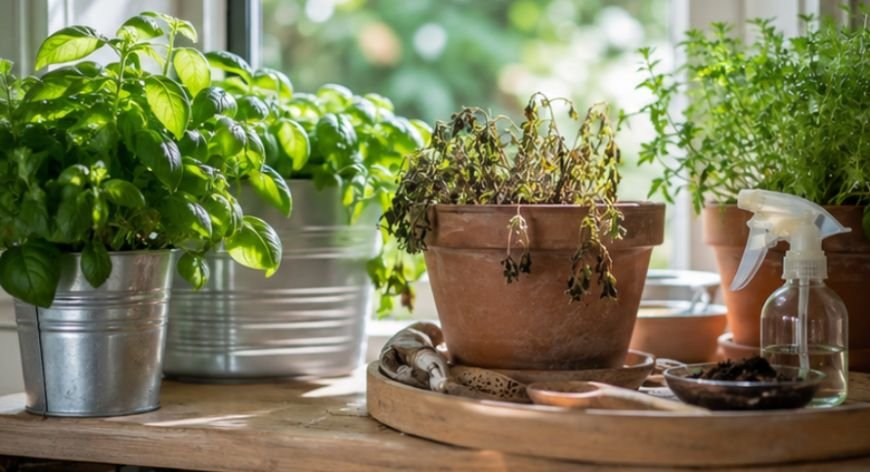
Different herbs need different moisture levels.
Help Leafy Herbs
Basil, parsley, cilantro, chives, and mint prefer more consistent moisture. Their soil should drain well but should not stay completely dry for long.
Cilantro may decline naturally in hot weather or after flowering. Basil dislikes cold drafts, while crowded mint often benefits from division or a larger pot.
Crowded roots are a common reason mint declines, so learning how to grow mint in containers can help you choose the right pot size, drainage, and maintenance routine.
Protect Mediterranean Herbs
Rosemary, thyme, sage, oregano, and lavender prefer fast drainage and longer drying periods. Constantly wet soil is especially risky for their roots.
Allow the mix to dry more deeply between waterings. A drooping rosemary plant in wet soil needs better drainage, not another drink.
Watch For Hidden Pests
Pests can cause decline after watering improves.
Inspect The Leaves
Look beneath leaves and around new growth for aphids, spider mites, whiteflies, scale, or thrips. Fine webbing, sticky residue, curled leaves, and pale speckles are common warning signs.
Isolate the pot and rinse a light infestation with a gentle stream of water. Protect the soil so it does not wash away.
Choose Safe Treatments
Use products labeled for edible herbs and follow dilution and harvest directions. Fungus gnats often appear when soil remains wet. Letting the surface dry and improving drainage usually makes the pot less attractive to them.
How To Revive Dying Herb Plant Step By Step
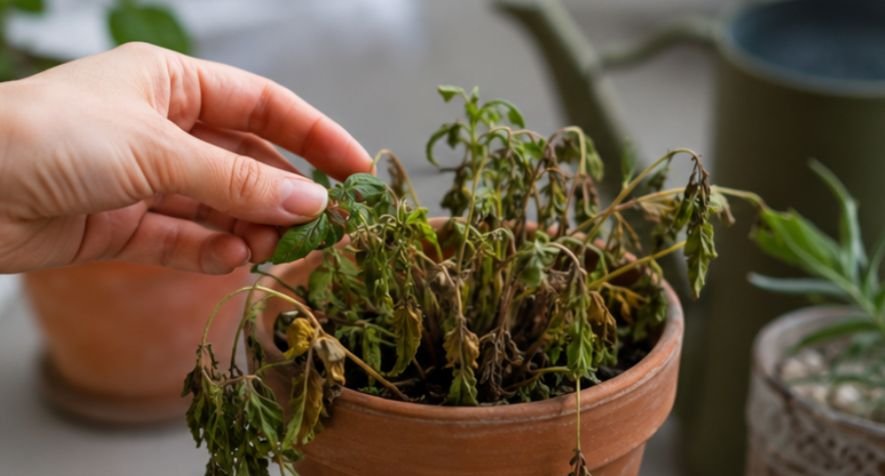
Start by checking whether the soil is dry or soggy. Soak bone-dry soil from the bottom for 20 minutes, or stop watering if the mix is wet. Next, inspect the roots and remove black, mushy, or bad-smelling sections.
Repot in fresh, draining soil, trim dead leaves, and place the herb in bright indirect light. Keep temperatures steady and avoid fertilizer for three to four weeks. Watch for new shoots before returning to normal care.
Make one major change at a time unless active root rot or pests require immediate action. This helps you identify what works and prevents several forms of shock.
Track The Recovery
Judge recovery by fresh growth, not instant perfection.
Follow A Realistic Timeline
An underwatered basil or mint plant may perk up within hours. A herb recovering from root rot, repotting, heat, or pests may need one to four weeks.
Old yellow leaves usually stay damaged. Firm new growth from the center, nodes, crown, or base is the clearest sign of recovery.
Take Backup Cuttings
If roots are badly damaged but some stems remain healthy, take cuttings. Basil, mint, oregano, rosemary, sage, and thyme can often grow from non-flowering stems.
Remove lower leaves and root the cutting in water or propagation mix as a backup.
Frequently Asked Questions
1. How To Bring Herb Plants Back To Life?
To understand how to revive dying herb plant, check moisture, inspect roots, trim dead growth, improve drainage, provide gentle light, and wait for new shoots before fertilizing.
2. What Can Bring A Dying Plant Back To Life?
Correct watering, clean pruning, fresh potting mix, drainage, pest treatment, suitable light, and steady temperatures may help when living roots, stems, or buds remain.
3. Will Dead Herbs Grow Back?
Completely dead annual herbs will not return. Perennial herbs such as mint, thyme, oregano, and chives may regrow from living roots or crowns after top growth dies.
4. What Are The Common Causes Of Herb Plants Dying?
Common causes include overwatering, underwatering, root rot, poor drainage, weak light, heat, cold drafts, pests, compacted soil, crowded roots, excess fertilizer, and natural decline.
From Droopy To Dinner-Ready
Learning how to revive dying herb plant is about slowing down and reading the clues. Soil, roots, leaves, stems, and pests each tell part of the story. Correct the real problem, keep conditions stable, and avoid overcare. With patient attention, that tired pot may soon provide fresh leaves for sauces, salads, teas, and home-cooked meals.